
 English
 Español
 Portugues
 Pусский
 Français
 Deutsch
 한국어
한국어 العربية
 Italiano
 Nederlands
 Polski
 ไทย
ไทย Türk dili
 हिन्दी
 Indonesia
 Melayu
 Tiếng Việt
 čeština
 Română
High-pressure gas pressure reducing valve for rocket engine control system
A high-pressure gas pressure reducing valve for a rocket engine control system is a critical component designed to regulate the delivery of pressurized gas from a high-pressure source to a lower, controlled pressure required by downstream subsystems. In rocket propulsion applications, this type of valve is commonly used to support engine start-up, chamber pressurization, actuator operation, purge systems, and other pneumatic control functions. Its main purpose is to ensure that gas pressure remains stable, accurate, and safe under demanding operating conditions.This valve must be engineered to withstand extreme environmental and operational stresses. It typically handles gases such as helium, nitrogen, or other inert pressurizing media at very high inlet pressures. The valve reduces this pressure in a controlled manner so that sensitive components are not damaged and the system can operate reliably. Because rocket engine systems demand precise pressure regulation, the valve must respond quickly to changes in flow demand while maintaining excellent stability and repeatability.A key requirement of this pressure reducing valve is high structural integrity. The body, internal trim, and sealing elements must resist high pressure, vibration, thermal cycling, and possible exposure to cryogenic or elevated temperatures depending on the application. Materials are usually selected for strength, corrosion resistance, low leakage, and compatibility with the working gas. In many cases, lightweight metal alloys or high-performance stainless steels are used to balance durability and mass efficiency.The valve design often includes a sensing element, such as a diaphragm or piston, that detects downstream pressure and adjusts the opening of the flow passage accordingly. When downstream pressure rises above the set point, the valve throttles the gas flow. When pressure drops, it opens further to restore the desired output pressure. This feedback mechanism helps maintain a consistent pressure level without requiring continuous manual intervention.Reliability is especially important in rocket engine control systems because failure can affect ignition sequence, thrust control, or overall mission safety. Therefore, the valve is usually tested for leak-tightness, pressure endurance, flow capacity, dynamic response, and long-term stability. It may also be designed with redundancy or fail-safe characteristics to improve system robustness. Cleanliness and contamination control are equally important, since even small particles can compromise sealing surfaces or restrict flow.In operation, the high-pressure gas pressure reducing valve contributes to smooth and precise engine control. It helps isolate the high-pressure storage section from the lower-pressure control circuits, prevents over-pressurization, and supports accurate regulation during transient conditions. Its performance directly influences the consistency and safety of the entire propulsion system.Overall, this valve is an essential element in rocket engine control architecture. By combining pressure reduction, flow regulation, durability, and responsiveness, it enables reliable operation of pneumatic subsystems in one of the most demanding engineering environments.
製品
カテゴリー:
-
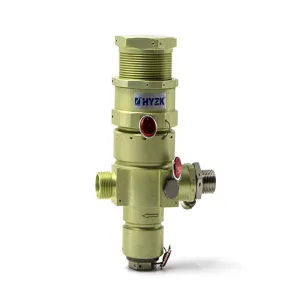
High pressure gas pressure reducing valve (35MPa) for rocket engine control system
彼らの分類: Pressure Reducing Valveビュー: 448番号:解放時間: 2026-10-23 17:09:45Valve body material: 2A14/TC4
Sealing material: polychlorotrifluoroethylene
Working medium: air, nitrogen
-
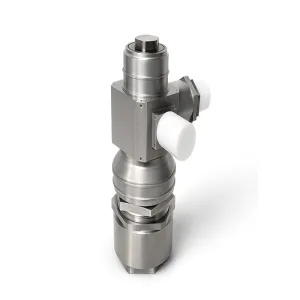
High pressure gas pressure reducing valve (23MPa) for rocket engine control system
彼らの分類: Pressure Reducing Valveビュー: 547番号:解放時間: 2026-10-23 17:08:59Valve Body Material: 7075-T6 GB/T3191-2010
Sealing Material: Polyvinylidene fluoride
Working Medium: Air, Nitrogen
ニュース
カテゴリー:
検索結果はありません!
ケース
カテゴリー:
検索結果はありません!
ビデオ
カテゴリー:
検索結果はありません!
ダウンロード
カテゴリー:
検索結果はありません!
採用
カテゴリー:
検索結果はありません!
おすすめ商品
検索結果はありません!



 ワッツアップ
 電話
電話